Gold, with its timeless allure and intrinsic value, has captivated humanity for millennia. Whether admired in exquisite jewelry, held as a tangible investment in the form of bullion, or exchanged as currency, its purity is a fundamental aspect that determines its worth and characteristics. This guide delves into the nuances of gold purity, demystifying terms like carats and millesimal fineness, and exploring how purity influences everything from color to practical applications.
The Essence of Gold Purity: Carats and Millesimal Fineness
Gold purity refers to the proportion of pure gold present in an alloy (mixture of gold and another metal), as gold in its purest form is quite soft. To enhance its durability and suitability for various uses, gold is often mixed with other metals. Two primary systems are used worldwide to express this purity: the carat (or karat in North America) system and the millesimal fineness system.

Decoding the Carat System
The carat system expresses gold purity in parts out of 24. A higher carat number signifies a greater proportion of pure gold.
What is a Carat? The word “carat” (from the carob seed, historically used as a unit of weight) signifies 1/24th part of a whole. Therefore, 24 carats (24K) represents pure gold.

Here are Common Carat Values and Their Meaning:
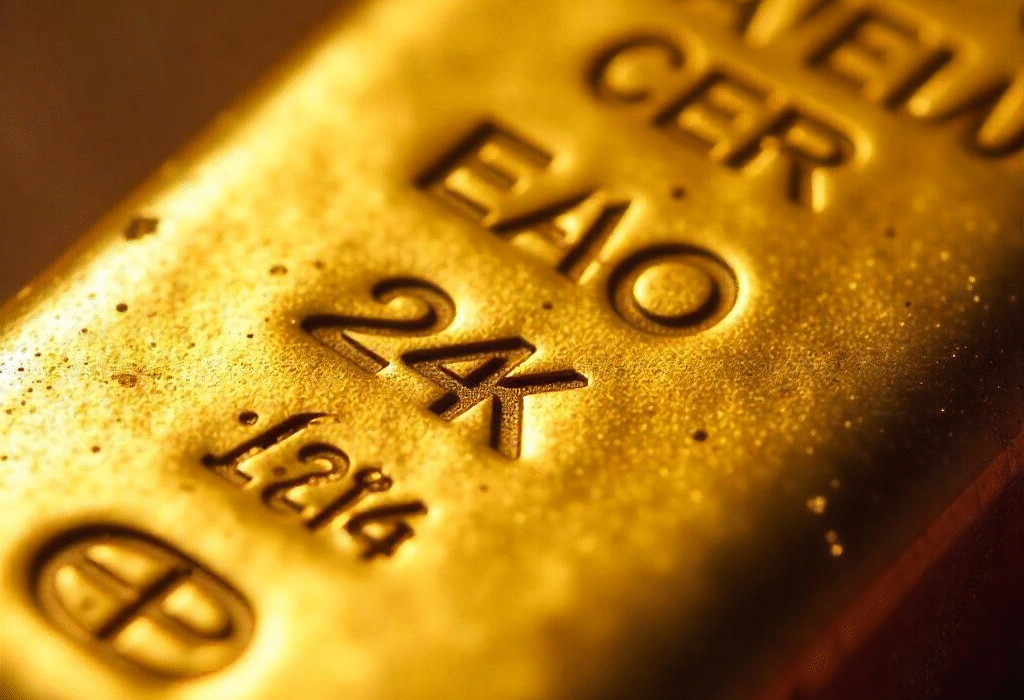
- 24 Carat (24K): This denotes pure gold, meaning it contains 99.9% or more pure gold. It’s the highest purity achievable in practical terms.
- 22 Carat (22K): Contains 22 parts gold and 2 parts other metals. This translates to 91.67% pure gold.
- 18 Carat (18K): Composed of 18 parts gold and 6 parts other metals, making it 75% pure gold.
- 14 Carat (14K): Consists of 14 parts gold and 10 parts other metals, equating to 58.33% pure gold.
- 10 Carat (10K): Contains 10 parts gold and 14 parts other metals, resulting in 41.67% pure gold.
- 8 Carat (8K): Comprises 8 parts gold and 16 parts other metals, representing 33.3% pure gold.
The reason for these various carat values is to achieve different levels of hardness, durability, and even color, as pure gold is too soft for many applications, especially jewelry that needs to withstand the rigors of daily use.
Understanding Millesimal Fineness
Millesimal fineness is a more precise and universally recognized system that expresses gold purity in parts per thousand. It is often seen stamped on gold bars, coins, and increasingly, on jewelry.
- What is Millesimal Fineness? It’s a three-digit number indicating the purity of gold out of 1,000. For example, a fineness of 999 means 999 parts of gold per 1,000 parts of the alloy, which means 99.9% pure gold.
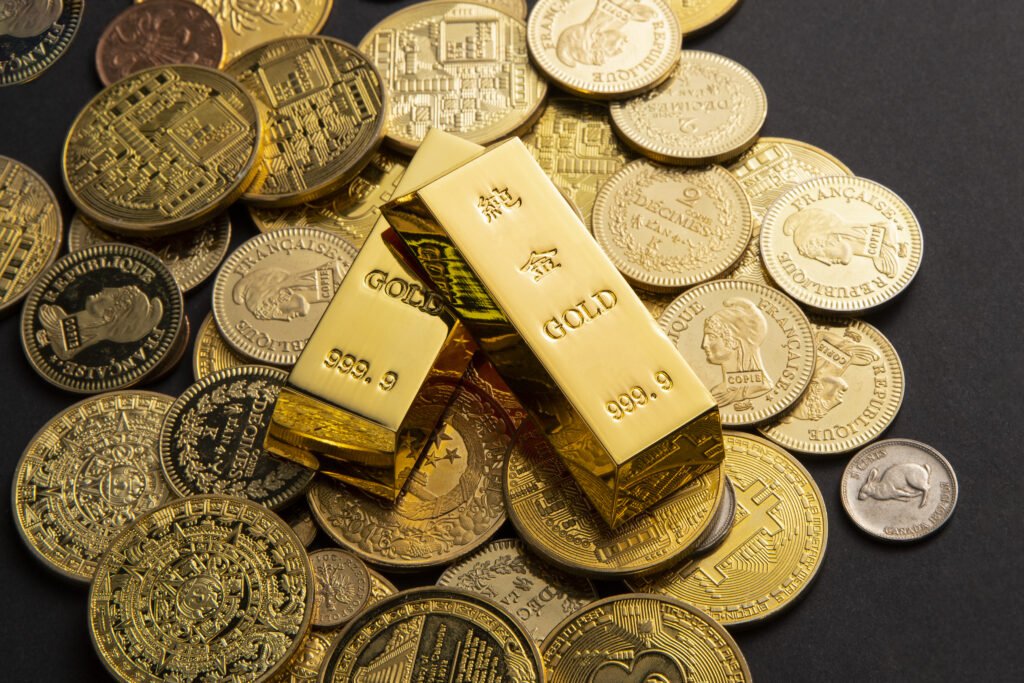
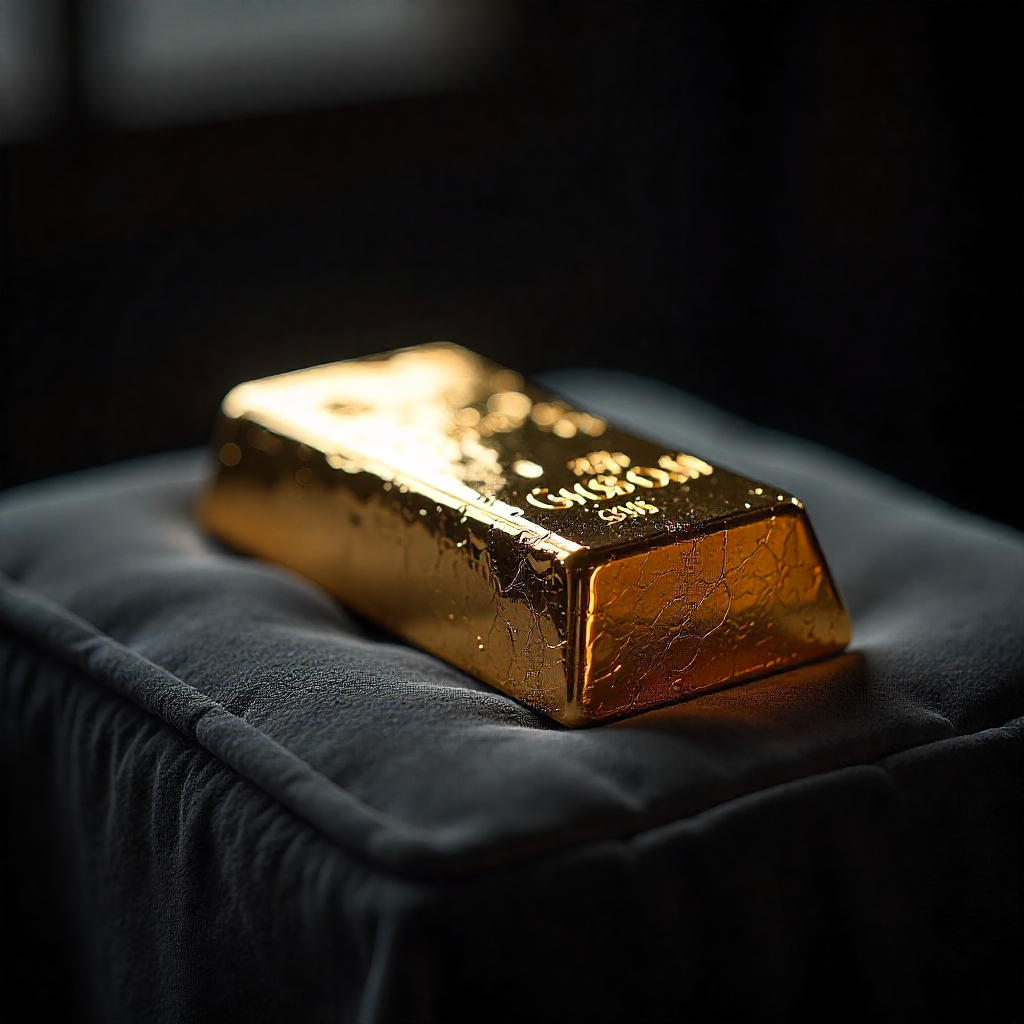
- The Significance of 999.9% on Gold Bullion: When you see “999.9%” stamped on gold bars or smaller gold bars, it signifies an extremely high level of purity: 999.9 parts of pure gold per 1,000 parts of the alloy. This is often referred to as “four nines fine” or “investment-grade gold.” It means that for every 1,000 units of weight, 999.9 of those units are pure gold, with only 0.1 being other trace elements. This level of purity is crucial for investment gold as it ensures standardized quality and easy tradability on global markets.
The two systems, karats and millesimal fineness, are directly convertible.
24K is equivalent to 999.9 or 999 fine (often rounded down to 999 for practical purposes, though 999.9 is common for bullion).
– 22K is 22/24=0.91666…, which is rounded to 916.7 or 917 fine.
– 18K is 18/24=0.75, or 750 fine.
– 14K is 14/24=0.58333…, or 583.3 (often rounded to 585).
– 10K is 10/24=0.41666…, or 416.7 (often rounded to 417).
Both terms exist because they cater to different historical and practical needs. Carats were traditionally used for jewelry, providing a quick understanding of gold content. Millesimal fineness offers a more precise and standardized measure, particularly important for the financial markets where specified purity dictates value.
Can Gold Be 100% Pure?
Achieving 100% pure gold (1000 fine or 24K) is theoretically possible but practically impossible due to the nature of refining processes. Even the most advanced techniques will leave infinitesimal traces of other elements. The refining process involves multiple stages of melting and chemical treatments to remove impurities, culminating in gold of exceptional fineness. Therefore, 999.9 fine is considered the highest purity commercially available and is synonymous with “pure gold” in the investment world.
Purity Across Gold Forms: Bullion, Coins, and Jewelry
The way gold purity is classified and its practical implications differ based on whether the gold is in a bar, a coin, or a piece of jewelry.
Gold Bullion Purity : Bars and Coins
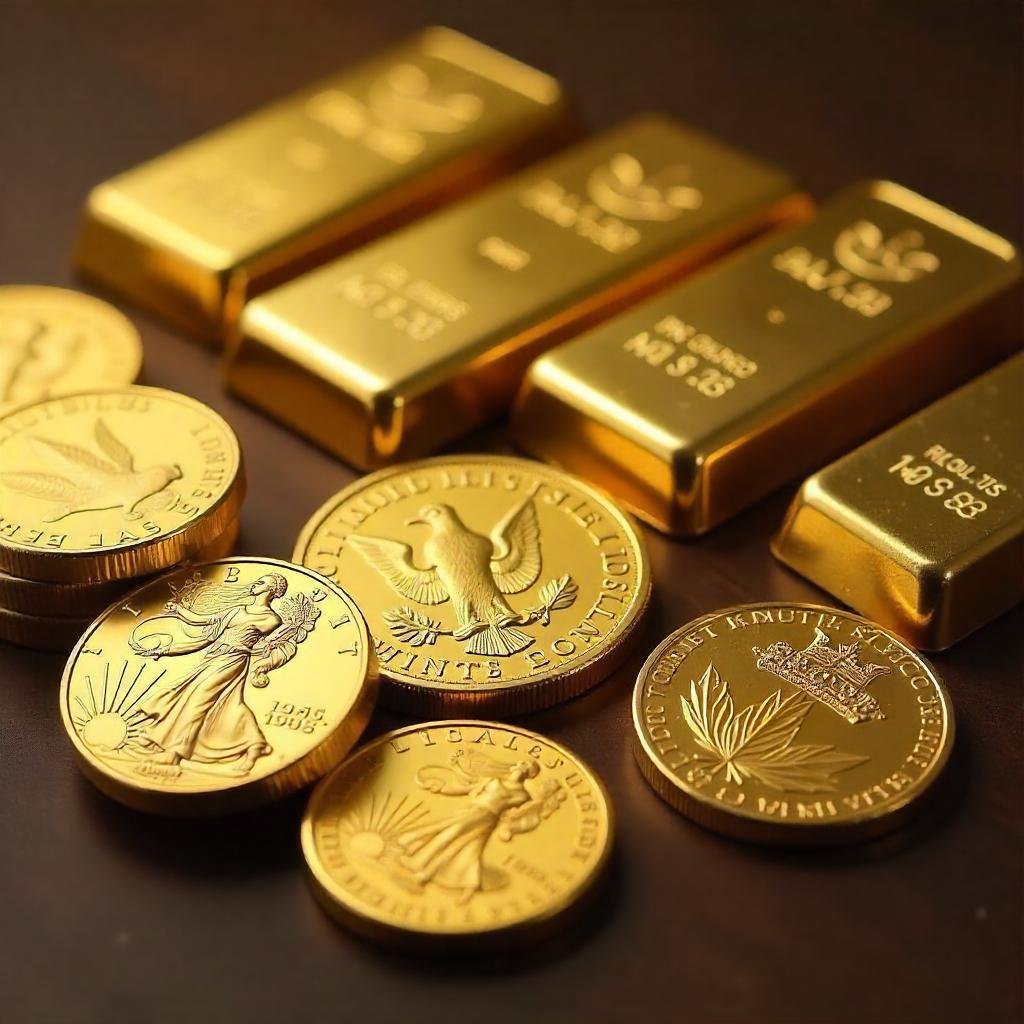
Gold bullion (physical gold that is valued for its metal content and purity, rather than its collectible or numismatic value), that could be gold bars or high purity gold coins, are typically held as investments and are therefore expected to have very high purity.
- Gold Bars Purity: Investment-grade gold bullion is almost exclusively 999.9 fine (24K). This high purity ensures its fungibility and accepted value on international markets. The term “Gold bullion” inherently implies high purity, and while not always 999.9, the vast majority of recognized investment bullion bars meets this standard. Lower purities are rare for actively traded bullion.
- Gold Coins: Many modern investment-grade gold bullion coins, such as the Canadian Gold Maple Leaf, are 999.9 fine. However, some historical or circulating gold coins, like the American Gold Eagle (22K) or the South African Krugerrand (22K), are intentionally alloyed for greater durability, making them more resistant to wear and tear during circulation. Even though they are not 999.9 fine, their gold content is precisely known and valued accordingly.
Gold Jewelry Purity: Various Factors to Consider
Unlike bullion, gold jewelry frequently uses alloys of varying purities to achieve desired characteristics.
- The Role of Alloys in Jewelry: When gold is not pure (24K), it means that other metals are added to enhance its strength, durability, and to influence its color. Pure gold is too soft to withstand the rigors of daily wear in jewelry. Common alloying metals include copper, silver, zinc, and palladium.
- The Absence of 24K Jewelry: While 24K jewelry exists, it is rare and typically found in cultures where gold is prized for its intrinsic value and worn for ceremonial purposes or in very delicate designs. The yellow metal’s extreme softness makes it impractical for most everyday jewelry, as it can easily scratch, bend, or deform.

Characteristics and Use of Different Gold Purity Levels in Jewelry:
- 22K (91.67% gold): Still quite soft but more durable than 24K. Popular in some traditional jewelry, particularly in India and the Middle East, where high gold content is valued.
- 18K (75% gold): A popular choice for fine jewelry due to its good balance of purity, durability, and rich gold color. It offers excellent resistance to tarnish and scratches compared to lower carats.
- 14K (58.33% gold): A common choice in the Western world, offering a good balance of durability and affordability. It is more resistant to scratching and denting than 18K gold, making it suitable for everyday wear.
- 10K (41.67% gold): The most durable and least expensive of the common gold purities for jewelry. Its high alloy content makes it very resistant to wear and tear, but it has a less vibrant gold color and is more likely to cause allergic reactions in some people because of its higher base metal content
- 8K (33.3% gold): Primarily found in some European markets, it is the lowest purity legally considered gold in many places. It is very durable but has a muted gold color.
The Impact of Purity on Gold Color
The purity of gold significantly influences its color. While pure gold is naturally a vibrant, deep yellow, alloying metals can create a diversity of tints.
- Pure Gold Color: 24K gold is typically characterized by a rich, warm, and bright yellow color. This is the natural color of the metal in its purest form.
- Colors of Alloyed Gold (Jewelry Examples):
- Yellow Gold: Achieved by alloying pure gold with silver and copper. The proportion of these metals influences the shade of yellow. Higher carat yellow gold (e.g., 18K) will have a deeper, richer yellow than lower carat yellow gold (e.g., 10K).
- White Gold: Created by alloying gold with white metals such as palladium, nickel, or silver. Often, white gold is rhodium-plated to give it a brighter, whiter finish and enhance its durability. Without rhodium plating, it typically has a slightly yellowish or grayish tint.
- Rose Gold (or Pink Gold/Red Gold): Results from alloying gold with a higher proportion of copper. The more copper present, the redder the hue. 18K rose gold, for example, is 75% gold and 25% copper (and sometimes a small amount of silver).
- Green Gold: Achieved by alloying gold with a higher proportion of silver and sometimes cadmium (though cadmium use is declining due to toxicity concerns). It has a subtle greenish tint.
- Blue Gold: Created by alloying gold with indium or gallSium. This color is less common in mainstream jewelry due to its brittleness and difficulty in working with.
- Purple Gold: Formed by alloying gold with aluminum. Similar to blue gold, it is very brittle and challenging to work with, making it rare in commercial jewelry.
For gold coins and bullion, while they are predominantly yellow due to their high purity, slight variations in shade might occur depending on the specific refining process and infinitesimal trace elements. However, they are not intentionally colored like jewelry.

What Else to Know About Gold Purity
For anyone interested in gold, beyond the basics of carats and fineness, here are some additional crucial points:
- Hallmarking and Assaying: Reputable gold items, whether jewelry or bullion, are typically stamped with a hallmark indicating their purity. These marks are often verified by independent assaying offices, which test the gold’s purity to ensure accuracy and consumer protection. Always look for these hallmarks when purchasing gold.
- Allergic Reactions: Individuals with sensitive skin should be mindful of potential allergic reactions to the alloying metals in gold jewelry, particularly nickel, which is often present in white gold. For those with known allergies, it’s best to choose gold with higher purity (e.g., 18K or 22K) or select rhodium-plated white gold, where the rhodium coating provides a barrier against potential irritants.
- Care and Maintenance: The purity of gold also affects its care requirements. Higher carat gold is softer and more prone to scratches, requiring more gentle handling. Lower carat gold, being more durable, can withstand more everyday wear.
- Investment vs. Aesthetics: When considering gold, it’s essential to distinguish between an investment objective and an aesthetic one. Prioritizing 999.9 fine gold bullion or highly pure coins is recommended for investment. For jewelry, the choice often balances purity, durability, color preference, and budget.
- Liquidity and Resale Value: Higher purity gold, especially 999.9 bullion, is generally more liquid and easier to sell at market price due to its standardized quality. Jewelry, even high-carat, will typically resell at a lower percentage of its original price, reflecting the craftsmanship and retail markup rather than just its gold content.
Understanding gold purity is key to making informed decisions, whether you are admiring a piece of jewelry, investing in precious metals, or simply appreciating gold’s enduring allure. Grasping the concepts of carats and millesimal fineness, and recognizing their implications across different gold forms, helps navigate the world of gold with greater confidence and clarity.