
In the intricate world of gold, where value hinges on purity and authenticity, gold hallmarks and assayer marks serve as crucial guarantors. These tiny, often overlooked symbols tell a powerful story about an item’s composition, origin, and legitimacy. Far from mere decorative stamps, they are the result of centuries of consumer protection and economic regulation, offering unparalleled confidence to both buyers and sellers in the precious metal market.
The Core Concepts: Gold Hallmarks and Assayer Marks Defined
At the heart of gold authentication lie two key terms: the hallmark and the assayer mark. While closely related and often found together, they serve distinct functions.
A hallmark is a series of marks applied to an item of precious metal by an independent, government-approved Assay Office. Its purpose is to guarantee the purity or fineness of the metal. It’s a comprehensive statement, encompassing details about the metal’s composition, the office that tested it, and the entity that submitted it for hallmarking.
An assayer mark, more precisely referred to as the Assay Office mark, found within a hallmark, is specifically the symbol indicating which Assay Office conducted the testing and applied the hallmark. It’s one component of the overall hallmark. The term “assayer mark” might also informally refer to the individual stamp of a gold assayer, who is a trained professional responsible for testing and determining the purity of precious metals.
The primary difference lies in their scope: a hallmark is a complete set of verifiable information, while the assayer mark (or Assay Office mark) is a specific part of that set, pinpointing the location of the official assessment.
In fact, for a piece to be considered “fully hallmarked” in many jurisdictions, the Assay Office mark is a mandatory component. A gold mark can’t truly exist without an assayer mark in the context of official precious metal verification. The entire hallmark, with its various components including the Assay Office mark, is crucial as it provides a legally recognized and independently verified assurance of quality.
Unpacking the Gold Hallmarking Process
Gold hallmarking is a rigorous process designed to protect consumers and maintain fair trade practices. It involves independent testing of precious metal articles to verify their purity, followed by the application of a series of official marks. This process ensures that the gold content claimed by a seller is accurate.
A typical full gold hallmark consists of several crucial details, each with its own origin and significance:
- Sponsor’s Mark (or Maker’s Mark): This is a unique symbol or set of initials representing the individual or company that manufactured the item or submitted it for hallmarking. It provides traceability back to the creator or responsible party, ensuring accountability. Its origin dates back to the 14th century, with goldsmiths (jewelry makers) initially using marks to identify their own work.
- Millesimal Fineness Mark: This numerical mark indicates the purity of the gold in parts per thousand. For example, “750” signifies 750 parts per thousand of pure gold, which translates to 18-karat gold (75% pure). “916” represents 916 parts per thousand, or 22-karat gold. “999” indicates 99.9% pure gold, or 24-karat. This system offers a precise and internationally understood measure of purity.
- Assay Office Mark: As discussed, this distinctive symbol identifies the specific Assay Office where the item was tested and marked. For instance, in the UK, a leopard’s head signifies the London Assay Office, an anchor for Birmingham, a castle for Edinburgh, and a rose for Sheffield. These marks have historical roots, often linked to the symbols of the towns or guilds where assaying began.
- Date Letter (Optional in some modern systems): Historically, a letter of the alphabet, changing annually, indicated the year the item was hallmarked. Different fonts and shields were used for each cycle of letters, allowing for precise dating. While no longer compulsory in all countries (like the UK since 1998), it remains a valuable feature for collectors and historians.
- Traditional Fineness Mark (Optional): In some systems, a traditional symbol might accompany the millesimal fineness mark to denote the metal type, such as a crown for gold.
Assayer marking, or the application of the Assay Office mark, is the physical stamping or laser etching of the designated symbol onto the precious metal item after it has successfully undergone assaying – the process of chemically analyzing the metal to determine its precise composition. This mark confirms that the item has been independently verified by an authorized body.
Evolution and Global Variations of Gold Hallmarking
The system of gold hallmarking has evolved significantly over time, adapting to technological advancements and international trade needs.
Old vs. New Hallmarking Systems
Historically, gold hallmarks were applied manually using punches. While this traditional method still exists, modern hallmarking often employs laser etching, particularly for delicate or intricate items. The primary benefit of these changes, beyond efficiency, is the ability to mark a wider range of items with less risk of damage.
- Benefits for the Buyer: Modern systems, especially those with standardized international marks (like the Common Control Mark of the Vienna Convention), enhance trust and ease of trade across borders. Buyers can have greater confidence in the purity of gold purchased internationally, and the non-destructive nature of laser marking preserves the aesthetic of delicate pieces.
- Benefits for the Seller: Streamlined processes and international recognition can facilitate easier export and import of gold items, expanding market reach. The legal backing of hallmarking also reduces the risk of disputes regarding metal purity, fostering a more transparent and trustworthy marketplace.

Geographic Variations in Gold Hallmarks and Assayer Marks
Gold hallmarks and assayer marks are not the same everywhere in the world. While the underlying principle of guaranteeing purity is universal, the specific marks, their arrangement, and the legal requirements vary significantly by country.
For example, the UK has a statutory hallmarking system, meaning it’s legally required for gold items above a certain weight to be hallmarked by one of its four Assay Offices. Countries like India also have compulsory hallmarking for gold jewelry. In contrast, the United States does not have a compulsory federal hallmarking law, though fineness marks are often applied by manufacturers.
The Vienna Convention on the Control and Marking of Articles of Precious Metals, also known as the International Hallmarking Convention, aims to harmonize hallmarking standards among signatory countries. Items hallmarked in a signatory country with the Common Control Mark (CCM) are recognized as equivalent to their own domestic hallmarks by other signatory countries, simplifying international trade. The CCM for gold is typically a balance scales symbol with the fineness number (e.g., 750) superimposed.
Reading and Understanding the Gold Marks
To read a gold hallmark, one needs to identify each component mark:
- Sponsor’s Mark: Look for initials or a unique symbol, usually enclosed in a specific shape.
- Millesimal Fineness Mark: This is a three-digit number (e.g., 375, 585, 750, 916, 999) indicating the purity.
- Assay Office Mark: Identify the symbol corresponding to the Assay Office (e.g., leopard’s head for London, anchor for Birmingham).
- Date Letter (if present): This is a single letter, often in a specific font and shield, that can be cross-referenced with hallmarking charts to determine the year.
Reading an assayer mark simply involves identifying the specific symbol of the Assay Office within the broader hallmark. This tells you where the independent verification took place.

The Purpose, History and Impact of Gold Hallmarking
The core purpose of gold hallmarking is consumer protection. It provides an independent, verified assurance of the precious metal content of an item, safeguarding buyers from fraud and misrepresentation. Without hallmarking, it would be extremely difficult for an average consumer to ascertain the true purity of gold, as its appearance doesn’t reveal its composition.
Hallmarking dates back centuries. King Edward I of England, in 1300, mandated a standard for gold and silver and required “les Gardeins du Mester” (meaning Guardians of the Craft, and “Gardeins” being old french) to test and mark items. This early form of quality control, often with marks like the leopard’s head (from the royal arms), laid the foundation for modern hallmarking. The Goldsmiths’ Company in London, established by royal charter in 1327, played a pivotal role in developing and regulating these standards.
Hallmarking has indeed changed and improved over time. Early systems were less standardized, and marks might have been less consistent. Over the centuries, stricter regulations, more precise assaying techniques (moving from touchstone tests to sophisticated chemical and XRF analysis), and clearer marking conventions have been introduced. The standardization brought about by bodies like the Assay Offices and international conventions significantly improved consistency and reliability.

Gold Marking: Contribution to Purity and Quality
Gold hallmarking directly contributes to the purity and quality of gold bars, coins, and jewelry ensuring trustworthiness through:
- Verification: It confirms that the stated purity (e.g., 22-karat or 24-karat) has been independently tested and meets the claimed standard.
- Accountability: The presence of a sponsor’s mark and Assay Office mark ensures that there is a traceable chain of responsibility for the item’s quality.
- Deterrent to Fraud: The legal requirement for hallmarking in many countries acts as a powerful deterrent against selling under-karated or fake gold.
The rule of marking gold originates from the need to ensure fair trade and prevent counterfeiting. Historically, dishonest merchants could easily dilute gold with cheaper metals, defrauding buyers. Marking provided a solution to this problem, fostering trust in transactions.
Regulation of Hallmarking
There are specific entities that regulate gold hallmarking and assayer marking. These are typically independent Assay Offices, often overseen by government bodies or long-standing guilds. In the UK, the four Assay Offices (London, Birmingham, Sheffield, Edinburgh) operate under the Hallmarking Act. In Switzerland, the Federal Office for Customs and Border Security (FOCBS) oversees precious metal control, including the distinct “head of a St. Bernhard dog” official hallmark for watch cases and other optional items. These offices employ certified gold assayers.
Do all gold products have hallmarks and assayer marks?
Not all gold products are legally required to have hallmarks or gold assayer marks:
- Gold Jewelry: In many countries with compulsory hallmarking, gold jewelry above a certain weight (e.g., 1 gram in the UK) must be hallmarked.
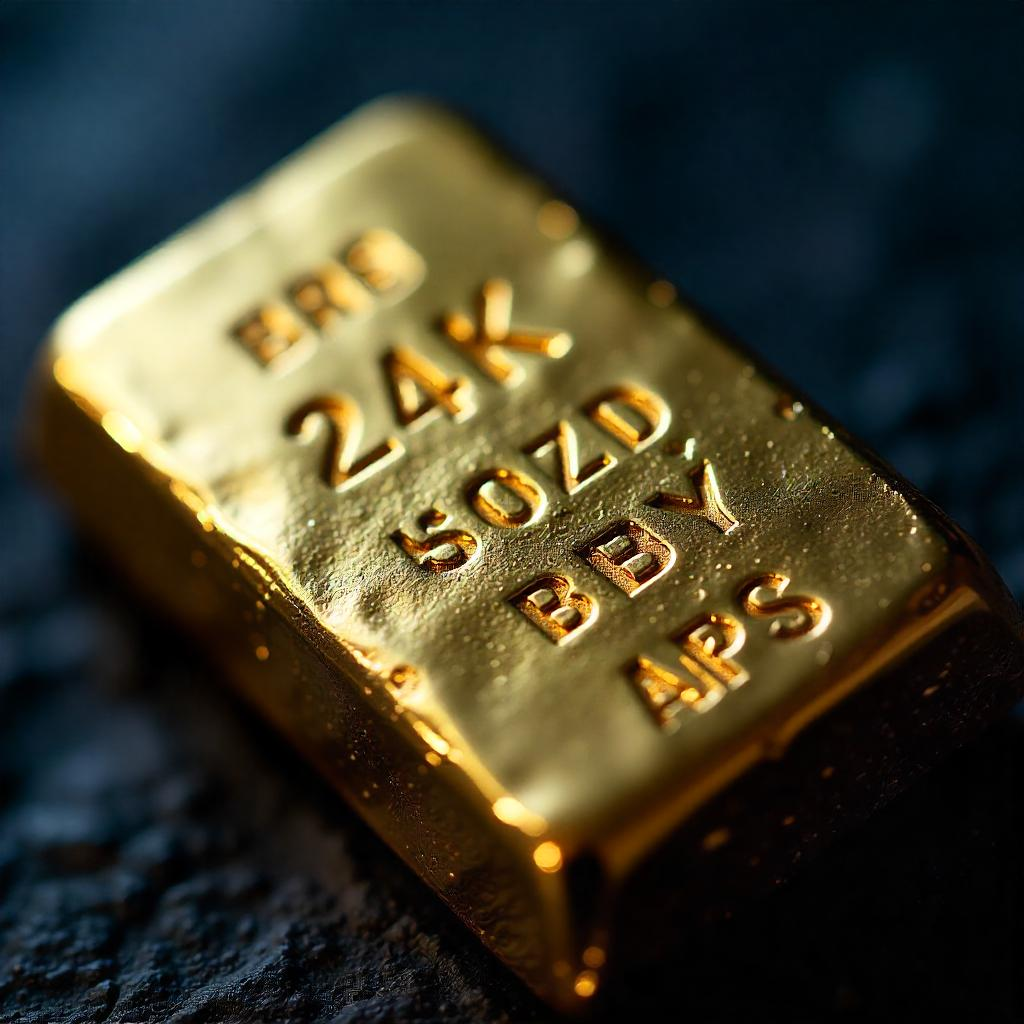
- Gold Bars: Investment-grade gold bars generally do not carry traditional hallmarks. Instead, they are typically stamped with the refiner’s mark (from an LBMA-approved refinery, for instance), the fineness (e.g., 999.9), and the weight. These stamps serve a similar purpose of verifying purity and origin in the bullion market.
- Gold Coins: Investment gold coins, especially those issued by sovereign mints (e.g., Canadian Gold Maple Leaf, American Gold Eagle), are generally recognized by their government-backed purity and weight specifications, which are inherent to the coin itself. They typically bear their fineness and weight, but not a separate “hallmark” in the same sense as jewelry.

Authenticating Gold Without Marks
While gold hallmarks, assayer marks and official stamps (especially on quality gold bars) are the most reliable indicators of authenticity, it is possible to identify and authenticate gold items (bars, coins, jewelry) without them, though it requires specialized knowledge and equipment.
Methods include:
- Weight and Density Testing: Gold has a unique density, and this property is key to determining its purity. Specialized equipment, like a densimeter or a hydrostatic balance, is used to precisely compare an item’s weight to its volume, which then indicates its gold content.
- Non-Destructive Testing (XRF): Non-Destructive Testing (XRF): X-ray fluorescence (XRF) analyzers can accurately determine the elemental composition of an item without damaging it. This is a common method used by professionals, but it’s important to note that these devices emit X-rays and should only be operated by trained individuals to ensure safety.
- Acid Tests: Involving applying specific acids to a small, inconspicuous part of the item and observing the chemical reaction. This is often done by experienced jewelers and can be destructive if not done carefully.
- Magnet Test: Gold is not magnetic, so if an item is strongly attracted to a powerful magnet, it’s likely not pure gold.
However, relying solely on these methods for non-hallmarked items carries a higher risk, as some fakes can mimic gold’s properties. Professional testing is always recommended for un-marked items of significant value, and this also helps to avoid any unnecessary risks when assessing authenticity.
Additional information about gold marking
- Exemptions: While many countries have compulsory hallmarking, there are often exemptions for very small items (under a certain weight), very old antique pieces (manufactured before a specific date), or items considered to be raw materials (like investment bars).
- Laser vs. Punch: Note that hallmarks can be applied by traditional punching or modern laser etching. Both are equally valid.
- “Part Marks”: In some cases, especially with items made of multiple precious metals, “part marks” may be applied to individual components indicating their specific fineness, alongside a full hallmark for the primary metal.
- Importance for Investors: While investment gold bars and coins may not have traditional hallmarks, their reputation relies heavily on the integrity of the refiner/mint and often adherence to standards like those set by the London Bullion Market Association (LBMA).
In conclusion, gold hallmarks and assayer marks are more than just tiny symbols; they are a sophisticated system that has evolved over centuries to provide transparency, protection, and trust in the global gold market. Understanding these marks empowers consumers, stabilizes economies, and ensures the enduring value of this precious metal.